This morning, I finished my 8am class and had a little less than an hour to read a chapter for a quiz in my education class. I went to the lobby of the building to read instead of the library like I usually do, mostly because I have a terrible cold and didn't feel like making the extra effort to walk over there. I began to read, and just could not concentrate, thanks to three girls having a conversation across the room. Normally, I'm pretty adept at tuning people out when I read. I can study just about anywhere without a problem, but this morning, it was impossible. Naturally, since I couldn't tune them out, I was listening to what they were saying. The first phrase I caught was "relationship with him", which had me a little annoyed that they chose MY reading spot to have a conversation about guys. Then I realized, they weren't talking about boys, they were talking about their relationships with God.
Most of the conversation was about school, and how they stress themselves out over trying to be perfect students (something I can relate to). They talked about how when they just stop trying to control that part of their lives and trust God to take care of it, He does. When they make time to spend with Him even though they "should be" writing a paper or studying for a class, the deadline for the paper gets pushed back and classes get canceled. Trust things to God and he will take care of them for you. They had a lot more to say about it, but that was the general idea, and they closed with a warm, heartfelt prayer.
When they finished, I got their attention and admitted that I had been eavesdropping. I told them that I was having a hard time tuning them out, but that their converstation had been exactly what I needed to hear. They were happy to hear it, made enthusiastic, friendly introductions, invited me to join them next week and told me they would be praying for me and my quiz. We said goodbye and I turned back to my work.
After all this, I had about twenty minutes to do the reading, which was basically enough time to read the chapter summary and hope for the best. At that point I had pretty much decided that doing poorly on this one quiz was a fair price to pay for the uplifting discussion I got to be a part of. I finished up the summary and went to class.
Quizzes in this class are 7 or 8 questions that we each sit and take individually: a couple true-false, some multiple choice, and a short answer or two. We've had lots of quizzes since the beginning of the semester, and they've all been basically the same. Today? Group quiz. We've never had a group quiz before, we probably won't again, but today we had one, just when I needed it most. Yet another example of how God knows what we need, and provides it for us.
Thursday, March 16, 2006

Saturday, January 28, 2006
1+1=2
OFFICIAL NOTICE: Until otherwise notified, please assume that this blog IS devoted entirely to math. Because I apparently never have anything interesting to say about anything else.
More about the introductory proof-writing class. We've spent the last couple days proving things that, up until this point, we simply accepted as true. Like this: If a>b, then a+c>b+c. Meaning you can add something to both sides of an inequality and the inequality is still true (for example: since 2>1, 2+3>1+3.) Obvious, right? Most of us probably used this kind of thing back in middle school, if not earlier. But actually writing a formal proof is not quite the same thing. Of course we can all SEE that the statement is true, but why it's true (and the steps to get there) are more important. It requires a different style of thinking than other math we've done up to this point, although once you get the idea it's actually kinda fun. So anyway, after a few days of proving stuff we always thought we knew, our professor writes this on the board:
1+1=2
And asks, "Why?"
You have never heard a more silent room.
Please note, this is a room full of math majors.
Thinking about it still makes me giggle.
After about 10 seconds, people started throwing out ideas, none of which were particularly correct. But at least we were trying.
It turns out it's true by definition. 2 is defined to be the sum of 1 and 1. Which was awfully nice, because none of the assumptions or theorems we had to work with were getting us anywhere close.
I love this class.
More about the introductory proof-writing class. We've spent the last couple days proving things that, up until this point, we simply accepted as true. Like this: If a>b, then a+c>b+c. Meaning you can add something to both sides of an inequality and the inequality is still true (for example: since 2>1, 2+3>1+3.) Obvious, right? Most of us probably used this kind of thing back in middle school, if not earlier. But actually writing a formal proof is not quite the same thing. Of course we can all SEE that the statement is true, but why it's true (and the steps to get there) are more important. It requires a different style of thinking than other math we've done up to this point, although once you get the idea it's actually kinda fun. So anyway, after a few days of proving stuff we always thought we knew, our professor writes this on the board:
1+1=2
And asks, "Why?"
You have never heard a more silent room.
Please note, this is a room full of math majors.
Thinking about it still makes me giggle.
After about 10 seconds, people started throwing out ideas, none of which were particularly correct. But at least we were trying.
It turns out it's true by definition. 2 is defined to be the sum of 1 and 1. Which was awfully nice, because none of the assumptions or theorems we had to work with were getting us anywhere close.
I love this class.
Sunday, January 22, 2006
I lied.
Although I said every post in this blog wasn't going to be about math, I'm three for three here. I may have doomed myself from the beginning with the title. Stick with me, and I'll try to have something else on my mind someday.
I'm taking Transition to Abstract Mathematics, which is neither as frightening nor as impressive as it may sound. It's about writing proofs, and before we get to actual proof writing (which I should be working on now, but that's beside the point), we've learned some basic logic. Lots of if-then statements, with some ands, ors, existential and universal quantifiers thrown in for good measure. We've been playing around with these a lot in preparation for some simple proofs.
The point: As I left class on Friday (my last class, the last day of the week), I realized I was pretty tired, and though it might be a good idea to get something caffineated for my (hour-and-then-some) drive home. The thought that popped into my head?
"If it's hot in my car, then I'll go to Starbucks and get an iced Chai tea latte."
I then proved to myself I've been spending too much time in that class.
This is logically equivalent to "Either NOT the first thing, or the second thing". Meaning, either it's not hot on my car, or I go to Starbucks and get an iced Chai tea latte.
Converse: "If I go to Starbucks and get an iced Chai, then it is hot in my car." (Not logically equivalent to the first statement... I could go to Starbucks for an iced chai even if my car was a cooler temperature.)
Inverse: "If it's not hot in my car, then I won't go to Starbucks and get an iced Chai."
(Also not logically equivalent to the first, for the same reasons above.)
Contrapositive: "I don't go to Starbucks and get an iced Chai, so it isn't hot in my car." (A-ha. This one IS logically equivalent!)
All this nonsense occured to me on the walk from my class to my car, at which point I decided that this train of thought was evidence that was certainly in need of both an iced Chai (veinte, in case you were wondering) and a relaxing weekend. After both, I think I'm ready to go tackle my homework. Because: IF I don't do the homework, THEN I won't understand what's going on in class tomorrow.
I'm taking Transition to Abstract Mathematics, which is neither as frightening nor as impressive as it may sound. It's about writing proofs, and before we get to actual proof writing (which I should be working on now, but that's beside the point), we've learned some basic logic. Lots of if-then statements, with some ands, ors, existential and universal quantifiers thrown in for good measure. We've been playing around with these a lot in preparation for some simple proofs.
The point: As I left class on Friday (my last class, the last day of the week), I realized I was pretty tired, and though it might be a good idea to get something caffineated for my (hour-and-then-some) drive home. The thought that popped into my head?
"If it's hot in my car, then I'll go to Starbucks and get an iced Chai tea latte."
I then proved to myself I've been spending too much time in that class.
This is logically equivalent to "Either NOT the first thing, or the second thing". Meaning, either it's not hot on my car, or I go to Starbucks and get an iced Chai tea latte.
Converse: "If I go to Starbucks and get an iced Chai, then it is hot in my car." (Not logically equivalent to the first statement... I could go to Starbucks for an iced chai even if my car was a cooler temperature.)
Inverse: "If it's not hot in my car, then I won't go to Starbucks and get an iced Chai."
(Also not logically equivalent to the first, for the same reasons above.)
Contrapositive: "I don't go to Starbucks and get an iced Chai, so it isn't hot in my car." (A-ha. This one IS logically equivalent!)
All this nonsense occured to me on the walk from my class to my car, at which point I decided that this train of thought was evidence that was certainly in need of both an iced Chai (veinte, in case you were wondering) and a relaxing weekend. After both, I think I'm ready to go tackle my homework. Because: IF I don't do the homework, THEN I won't understand what's going on in class tomorrow.
Wednesday, December 07, 2005
Despite all appearances...
... I will not be making every entry in this blog about math.
But this one is. Feel free to skip it. I considered not even posting it, because I'm not sure anyone but me is interested in this. Forge ahead if you are. :)
Mathematics
You scored 23 mental chops, 13 work ethic, 13 bulls***ability, and 9 practicality!
So you're smart, but you're also lazy as heck and don't care too much about your post-college prospects (unless you're one of those rat race academic types or you're a dual major in something more practical). You'd make a good math major if you're really that bright--not many words, just you and the symbols, baby. That is, symbols that scare the pants off of most other people, but you've come to realize that they're a lot friendlier and easier to deal with than that pretentious literary crap. Math majors are also entitled to make the corniest jokes and pickup lines, so have at it, O awkward one. [Editor's note: Corny jokes! They read my last post!]
My test tracked 4 variables
How you compared to other people your age and gender:
You scored higher than 57% on mental chops
You scored higher than 37% on work ethic
You scored higher than 19% on bulls***ability
You scored higher than 61% on practicality
Well, according to an online test (and we all know how infallible those are) I at least picked the right major.
The only problem is, majoring in math seriously scares me.
Math has become increasingly abstract. Although I can do the problems and get the right answers (for the most part), there are some ideas that I simply can't seem to wrap my brain around. I have yet to figure out if the flaw lies in the way it's been presented to me, or if I have simply reached a point where I don't have the mental capacity required for complete understanding.
For example: (don't run away if this looks scary, it really isn't that bad.)
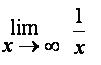 This means: as x gets really really big (approaches infinity), what does 1/x approach? The bigger the number you plug in for x, the smaller the value of the fraction. If x is 4, you get 1/4. If x is 20,000,000, you get 1/20,000,000, which a lot smaller than 1/4. So, as x gets really really big, 1/x gets really really small. You can say that it is approaching zero. Make sense?
 This means: as x gets really really big (approaches infinity), what does 1/x approach? The bigger the number you plug in for x, the smaller the value of the fraction. If x is 4, you get 1/4. If x is 20,000,000, you get 1/20,000,000, which a lot smaller than 1/4. So, as x gets really really big, 1/x gets really really small. You can say that it is approaching zero. Make sense?
HOWEVER... when you come across this in a problem, both Calc professors I've had said to treat it as zero. But it ISN'T zero! It's really really really close, but no matter how infinitely large x becomes, 1/x still won't ever actually equal zero. The way I see it, if you call that zero, you don't get an exact answer. You get one that's REALLY REALLY close. But we call it exact. Does that seem like flawed logic to anyone else?
I think I just need an amazing professor who will take the time to explain it to me.
I hope that's the solution, anyway.
I hope that's the solution, anyway.
Or maybe I should be a liberal arts major and teach 4th grade instead of high school. That way I can teach fractions. Most of the students I tutor who are having a hard time in algebra are terrible at fractions. Coincidence? No.
That's a whole 'nother problem in itself. My original plan when I started community college was to teach elementary school. So I took Math For Elementary Teachers. It was absolutely horrifying to me how many people in that class were terrible at math. This was not the difficult stuff folks, we're talking fractions and decimals here. Not even algebra. The test scores were astonishing. And these people want to TEACH ELEMENTARY SCHOOL! If someone barely passed Math for Elementary Teachers with a C-, do you want them teaching YOUR kids the basic math skills they need to be successful in Algebra? I certainly don't.
Tuesday, December 06, 2005
A short explanation.
The name of this blog proves, without a doubt, that I have crossed some kind of line.
On one side of this line, there are those who are simply "good at math".
On the other side is my Math 104 professor who not only looked but also sounded just like Elmer Fudd. He enjoyed jokes like this one:
What transformation is this?
(Long pause while all of us math/engineering/etc. majors rack our brains, thinking we MUST have learned this somewhere along the line.)
...
...
...
The parting of the Red Sea!
Of course, since he had that unfortunate speech impediment, it came across as "The pawting of the Wed Sea!" He tried to tell it to us three times in the course of a semester.
I've joined him.
I was searching for something a little more clever than "Michelle's Blog" for a title. In my search, I came across this:
Jesus and his disciples were walking around one day, when Jesus said, "The Kingdom of Heaven is like 3x squared plus 8x minus 9." The disciples looked very puzzled, and finally asked Peter, "What on earth does Jesus mean - the Kingdom of Heaven is like 3x squared plus 8x minus 9? Peter said, "Don't worry. It's just another one of his parabolas."
Did you laugh out loud at that?
Because I did.
I have definitely crossed some kind of line. So it begins.
On one side of this line, there are those who are simply "good at math".
On the other side is my Math 104 professor who not only looked but also sounded just like Elmer Fudd. He enjoyed jokes like this one:
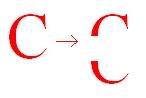
What transformation is this?
(Long pause while all of us math/engineering/etc. majors rack our brains, thinking we MUST have learned this somewhere along the line.)
...
...
...
The parting of the Red Sea!
Of course, since he had that unfortunate speech impediment, it came across as "The pawting of the Wed Sea!" He tried to tell it to us three times in the course of a semester.
I've joined him.
I was searching for something a little more clever than "Michelle's Blog" for a title. In my search, I came across this:
Jesus and his disciples were walking around one day, when Jesus said, "The Kingdom of Heaven is like 3x squared plus 8x minus 9." The disciples looked very puzzled, and finally asked Peter, "What on earth does Jesus mean - the Kingdom of Heaven is like 3x squared plus 8x minus 9? Peter said, "Don't worry. It's just another one of his parabolas."
Did you laugh out loud at that?
Because I did.
I have definitely crossed some kind of line. So it begins.
Subscribe to:
Posts (Atom)

